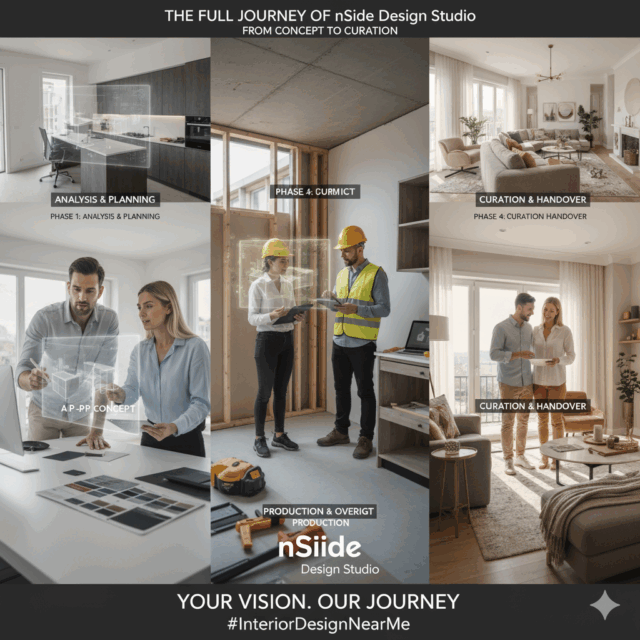

Are you considering a home makeover, a new office interior design, or simply curious about the magic behind stunning spaces? Understanding the process an interior design company follows is the key to a stress-free and spectacular result. This journey goes far beyond picking paint colours—it’s a structured, creative, and technical evolution designed to transform your vision into a habitable reality.
Here is the full journey, broken down into five essential phases, showcasing how professional interior designer teams integrate services like 3D interior design and embrace modern tools, including the A-P-P Concept (Analysis, Planning, Production), to deliver exceptional spaces.
Phase 1: Analysis – Defining the Vision (The ‘A’ in A-P-P)
Before any design work begins, a professional interior design company dedicates significant time to understanding the client’s needs, lifestyle, and goals.
- Initial Consultation & Needs Assessment: This is where the interior designer dives deep. Whether you’re looking for focused kitchen interior design or a complete whole-home overhaul, the designer asks critical questions about function, budget, timeline, and aesthetic preferences.
- Site Survey & Measurement: For local projects, the team conducts a detailed survey. If you’re searching for “interior design near me,” this local touch ensures they account for specific architectural quirks and local building codes.
- Concept Development: Based on the analysis, a preliminary concept—a mood board, colour palette, and initial direction—is established. This ensures both the client and the interior design company are aligned.
Phase 2: Planning – Designing the Details (The ‘P’ in A-P-P)
This is the technical phase where the abstract concept solidifies into concrete, executable plans.
- Space Planning & Layout: The interior designer develops detailed floor plans, optimizing the flow, function, and furniture placement. This is critical for both efficient home interior design and productive workspaces.
- 3D Interior Design & Visualization: The power of technology shines here. The team uses advanced software to create high-fidelity renderings, offering a true-to-life preview of the finished space. This 3D interior design step is crucial for client approval and minimizing costly changes later.
- Material & Finish Specification: Every material, from flooring and wall finishes to fixtures and cabinetry, is meticulously selected and documented.
- Virtual Interior Design Integration: For remote clients or early-stage conceptual work, the ability to offer virtual interior design consultations and walkthroughs based on 3D models streamlines communication and decision-making, regardless of location.
Phase 3: Production – Bringing the Plan to Life (The Second ‘P’ in A-P-P)
With the plan approved, the focus shifts to execution and project management.
- Procurement & Ordering: The interior design company manages the sourcing, purchasing, and tracking of all materials, furniture, and custom pieces. This expertise ensures items arrive on time and within budget.
- Contractor Management: The interior designer acts as the client’s advocate, coordinating with architects, general contractors, and specialized tradespeople (electricians, plumbers, etc.). This ensures quality control and adherence to the design specifications.
- Construction & Installation Oversight: Regular site visits are essential. The team monitors the construction process, ensuring the execution matches the approved 3D interior design plans, whether it’s the build-out for an office interior design or the complex installation of a new kitchen interior design.
Phase 4: Curation & Styling – The Finishing Touches
This is where the space transitions from a construction site to a personalized, ready-to-use environment.
- Furniture Placement & Accessorizing: The interior designer and their team handle the professional installation and placement of furniture, artwork, and lighting.
- Styling: This final, crucial step involves curating accessories, textiles, and decor to infuse personality and polish. It’s the subtle difference that elevates a nice room to a truly designed space.
Phase 5: The Handover & Follow-Up
The journey concludes with a final walk-through, often incorporating the virtual interior design models for comparison. The client confirms satisfaction, receives all relevant documentation, and the interior design company confirms that the final space perfectly reflects the original brief and meets every functional and aesthetic requirement.
Frequently Asked Questions (FAQs)
What are the main phases in an interior design project?
An interior design project typically follows five key phases—Analysis, Planning, Production, Curation, and Handover. Each stage ensures a smooth transition from concept to completion.
What happens during the Analysis phase of interior design?
The Analysis phase focuses on understanding the client’s goals, lifestyle, and preferences. This includes consultations, site surveys, and concept development to establish a clear vision for the project.
How does 3D interior design help clients visualize their space?
3D interior design allows clients to preview the final design before implementation. It provides realistic renderings, minimizing changes during execution and helping clients make confident design decisions.
What is the A-P-P Concept in interior design?
The A-P-P Concept stands for Analysis, Planning, and Production. It’s a structured design process used by professional interior design companies to ensure creativity, precision, and efficiency.
How do interior designers manage construction and installation?
Interior designers coordinate with contractors and suppliers to oversee the entire execution process. They ensure that materials, furniture, and installations align with approved 3D design plans.
What is included in the curation and styling phase?
This phase involves final touches like furniture placement, lighting, accessories, and decor styling—transforming the space into a personalized and visually cohesive environment.
Why is hiring a professional interior design company important?
A professional company ensures seamless execution—from design to delivery—using structured processes, 3D visualization, and expert coordination for the best results.
Can interior design services be done virtually?
Yes, many designers now offer virtual interior design services using 3D modeling and online consultations, making it easy for clients to collaborate remotely.