

Sustainable Design
Sustainable & Eco-Friendly Interior Design Materials for 2026
A practical look at which eco-friendly materials are worth specifying, and where the real cost trade-offs are.
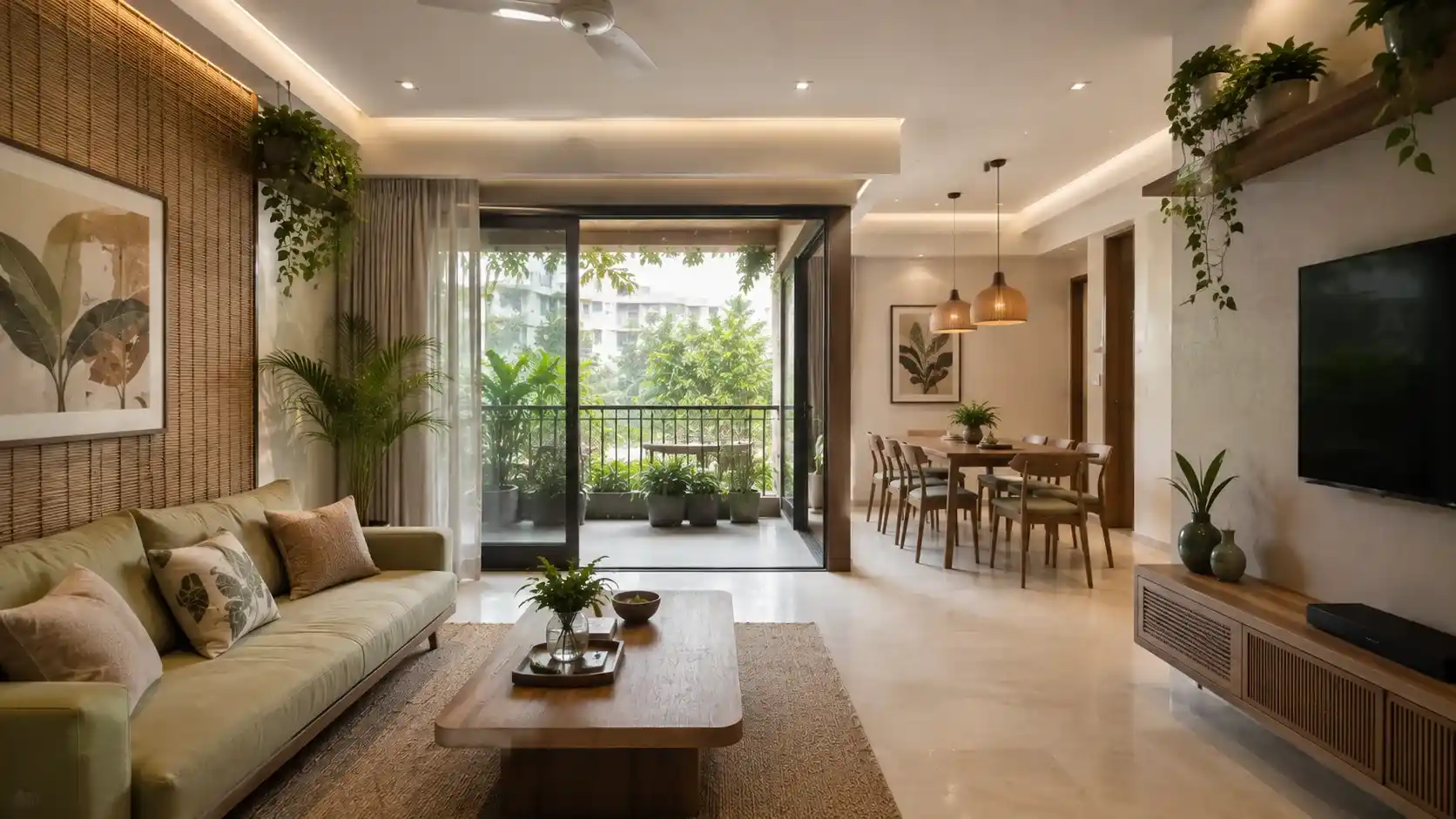
Sustainable materials in interior design used to mean a narrower, pricier set of choices. That’s changed considerably. Certified plywood, low-VOC finishes, and recycled or reclaimed materials are now stocked by mainstream suppliers, which has narrowed the price gap and made sustainable specification a realistic option for most residential budgets, not just premium projects.
This guide covers the material categories worth prioritising, what they typically cost relative to standard alternatives, and which choices suit Gujarat’s climate specifically.
Material Categories to Prioritise
FSC-Certified Plywood
Sourced from responsibly managed forests, this is one of the easiest sustainable swaps since it functions identically to standard plywood in cabinetry and furniture construction.
Low-VOC Paints and Finishes
Reduces off-gassing of volatile organic compounds indoors, particularly relevant in bedrooms and closed rooms with limited ventilation.
Reclaimed and Recycled Materials
Reclaimed wood accent pieces and recycled-content tiles add character while reducing demand on virgin material extraction.
Energy-Efficient Lighting
LED fixtures with appropriate star ratings reduce ongoing energy costs significantly compared to older lighting technology, a sustainability choice that also pays back financially.
Are Eco-Friendly Materials More Expensive?
Some carry a modest premium, certified plywood and low-VOC paint typically cost somewhat more than standard alternatives, but the gap has narrowed as demand has grown and more suppliers stock these options locally. Others, like energy-efficient LED lighting, often cost less over the product’s lifetime once reduced energy consumption is factored in.
A practical approach is to prioritise sustainable specification in high-impact, high-touch areas, kitchens, wardrobes, and lighting throughout, rather than applying it uniformly across every material in the home if budget is a constraint.
Which Sustainable Material Is Best for Gujarat’s Climate?
Moisture-resistant, certified plywood performs particularly well in Gujarat given the humidity swings across monsoon season, combining sustainability with the practical durability the climate demands. Low-VOC paints are also especially relevant here, since closed rooms during peak summer heat with air conditioning running tend to trap indoor air for longer stretches, making off-gassing reduction more meaningful.
For homeowners aiming toward formal certification, the Indian Green Building Council’s green homes framework outlines the material and design criteria involved, useful context even if certification itself isn’t the goal.
Questions to Ask Your Supplier
- Is the plywood FSC-certified, and can documentation be provided?
- What is the VOC rating of the paint or finish being proposed?
- Are any reclaimed or recycled-content materials available for accent pieces?
- What star rating do the proposed lighting fixtures carry?
Sustainability as Part of a Broader Design Concept
Material choices work best when they’re part of a coherent overall design rather than isolated swaps. A studio experienced in translating interior design concept to curation can help specify sustainable materials that also support the aesthetic direction you want, and it’s worth reviewing how these choices show up in end-to-end interior design services and completed projects before finalising your own specification.
Frequently Asked Questions
Are eco-friendly materials more expensive?
Some carry a modest premium, though the gap has narrowed as demand has grown, and options like LED lighting can cost less over their lifetime.
Which sustainable material is best for Gujarat’s climate?
Moisture-resistant certified plywood performs particularly well given the region’s humidity swings, and low-VOC paints are especially relevant in closed, air-conditioned rooms.
Is FSC-certified plywood harder to source than standard plywood?
Not anymore, most mainstream suppliers now stock certified options alongside standard plywood.
Do low-VOC paints perform as well as standard paints?
Yes, modern low-VOC formulations generally match standard paint in durability and finish quality.
Should I use sustainable materials in every room?
If budget is a constraint, prioritising high-touch areas like kitchens and wardrobes first is a practical approach.
Does LED lighting really save money over time?
Yes, reduced energy consumption typically offsets the higher upfront cost of LED fixtures within a reasonable period.
Can reclaimed wood be used structurally in furniture?
It’s more commonly used as an accent or feature material rather than for load-bearing furniture components, where consistency matters more.
How do I verify a material’s sustainability claims?
Ask for certification documentation, such as FSC certificates for plywood or VOC ratings for paint, rather than relying on marketing claims alone.
Is green building certification necessary for a residential project?
Not necessary for most homeowners, but the criteria used in certification frameworks are a useful reference point even without pursuing formal certification.
Do sustainable materials affect design flexibility?
Generally no, most sustainable materials today are available in a wide enough range of finishes and colours to support any design direction.
Build a Home That’s Sustainable and Stylish
Sustainable material choices no longer mean compromising on design, they’re a realistic option for most residential budgets today.
Explore interior design options or learn more about the studio’s approach to sustainable material specification.