

Seasonal Guide
Monsoon-Proofing Your Home Interior: Tips from Rajkot Designers
Flooring, wall treatment, and ventilation choices that keep a home comfortable through Gujarat’s monsoon season.
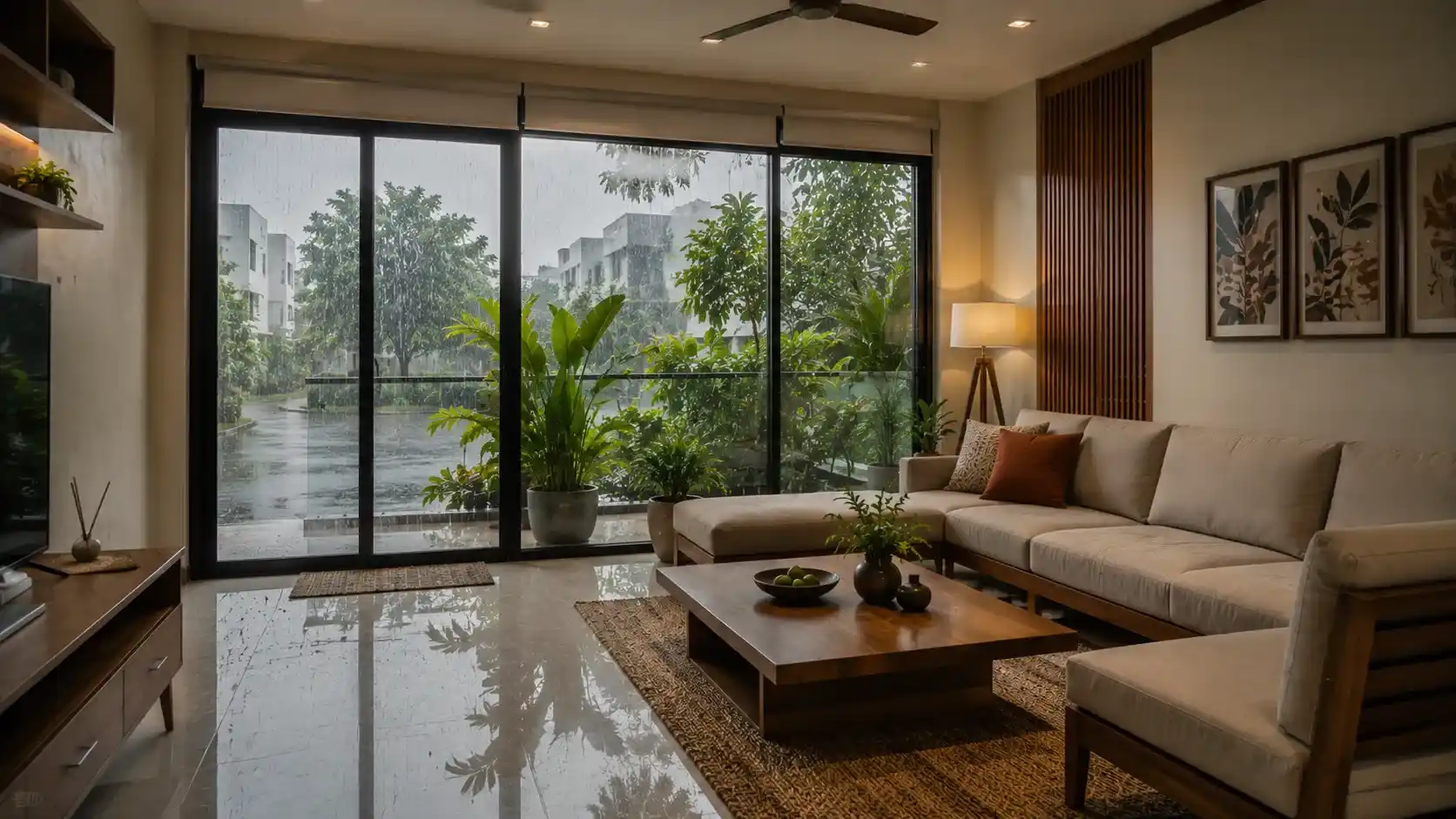
Most interior finish problems that show up during Gujarat’s monsoon didn’t start during the monsoon, they started with a material or ventilation decision made months earlier that only becomes obvious once humidity spikes. Damp patches on walls, peeling laminate, and musty wardrobes are almost always preventable with the right choices at the design stage.
This guide covers what actually protects a home’s interior through the monsoon, flooring, wall treatments, ventilation, and a few habits worth adopting before the season starts.
Which Flooring Is Best for Monsoon in Gujarat?
Vitrified tiles and polished concrete generally hold up best against humidity, since they’re non-porous and don’t absorb moisture the way some natural stone or untreated wood finishes can. Solid wood flooring is more vulnerable to swelling in high humidity, so if a wood look is important, engineered wood with proper sealing is a safer choice than solid planks in monsoon-prone regions.
How Do I Stop Dampness on Interior Walls?
Interior dampness usually traces back to an exterior waterproofing gap rather than the interior finish itself, so the first step is checking exterior walls, terrace waterproofing, and window seals before repainting an affected interior wall. Once the source is addressed, a breathable, moisture-resistant paint on interior walls prevents trapped moisture from causing the same patch to reappear the following year.
Cross-ventilation also plays a bigger role than most people expect. A room that traps humid air without airflow stays damp longer after rain than one with even a small secondary vent or exhaust point.
Material Choices That Hold Up Through the Season
| Area | Monsoon-Resilient Choice |
|---|---|
| Flooring | Vitrified tiles or sealed engineered wood over solid wood or untreated stone |
| Cabinet carcasses | Moisture-resistant plywood over standard particle board |
| Wall paint | Breathable, moisture-resistant paint over standard emulsion in humid-prone rooms |
| Window and door frames | UPVC or properly sealed wood over untreated timber frames |
Pre-Monsoon Checklist
- Inspect terrace and exterior wall waterproofing before the season starts, not after leaks appear.
- Check window and door seals for gaps that let water seep in during heavy rain.
- Air out wardrobes and cabinets periodically to prevent trapped humidity and musty odours.
- Keep exhaust fans and secondary vents functional in bathrooms and kitchens.
- Address any existing damp patches before repainting, since painting over the source doesn’t fix it.
Planning Monsoon Resilience Into a New Project
If you’re planning a renovation, it’s far easier to specify monsoon-resilient materials upfront than to retrofit them later. A studio experienced with interior design across Gujarat’s climate conditions can guide material selection for flooring, cabinetry, and wall finishes based on how exposed each room is to humidity. Cost differences between standard and moisture-resistant materials are usually modest and worth reviewing against a full interior design cost breakdown before finalising specifications.
Frequently Asked Questions
Which flooring is best for monsoon in Gujarat?
Vitrified tiles and polished concrete are the most resilient, since they’re non-porous. Solid wood is more vulnerable, so sealed engineered wood is a safer alternative if a wood look is desired.
How do I stop dampness on interior walls?
Check exterior waterproofing and window seals first, since interior dampness usually originates outside, then use breathable moisture-resistant paint on the affected wall.
Should I repaint a damp wall before fixing the leak source?
No, painting over an unresolved leak source means the damp patch typically returns the following monsoon.
Do moisture-resistant materials cost significantly more?
The premium is generally modest, particularly for plywood grade and paint, and worth it given the cost of repairing damage later.
How often should I air out wardrobes during monsoon?
Periodically, roughly every couple of weeks during peak monsoon, to prevent trapped humidity and musty odours from building up.
Is UPVC better than wood for window frames in monsoon?
UPVC resists moisture more consistently than untreated wood, though properly sealed and maintained wood frames can also perform well.
Should I check waterproofing before or after monsoon starts?
Before. Inspecting terrace and wall waterproofing ahead of the season prevents damage rather than reacting to it after leaks appear.
Does cross-ventilation really make a difference indoors?
Yes, rooms with airflow dry out faster after rain than sealed rooms where humid air gets trapped.
Can monsoon-resilient materials be specified for an ongoing renovation?
Yes, it’s far easier to specify these materials upfront during design than to retrofit them after the project is complete.
Prepare Your Home Before the Season Starts
Monsoon-proofing works best when it’s planned into material choices early, not added as a repair afterward.
Talk to an interior designer in Rajkot about monsoon-resilient material choices, or get in touch to discuss your home.